Home Blog Page 20

Latest Breakthroughs in Mouldmaking and Plastics Processing Debut at K2025

Latest Breakthroughs in Mouldmaking and Plastics Processing Debut at K2025

As a reliable and responsible partner for mouldmaking and the plastics-processing industry, HASCO will be focusing at K2025 on practice-related new and further developments, digitisation in mouldmaking, process reliability and energy efficiency – all with the aim of integrating sustainable and future-oriented solutions.

The latest new products will be presented live in Hall/Stand 1/C06.

Mould Base innovations

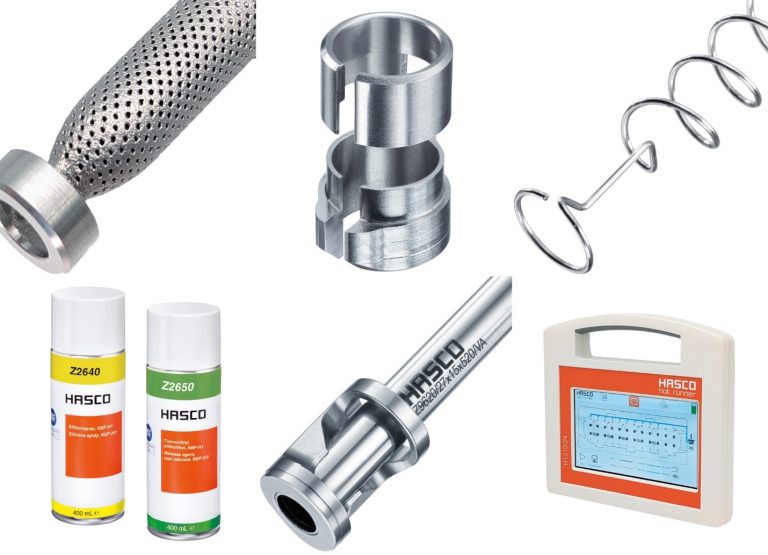
The cooling range has been increased. The extended cooling system Ø5 allows precise cooling of slide bars and small moulds – ideal for complex applications with limited build volume. The portfolio is supplemented by further chemical working substances with NSF H1 certification, which meet the highest safety standards in food and medical technology.

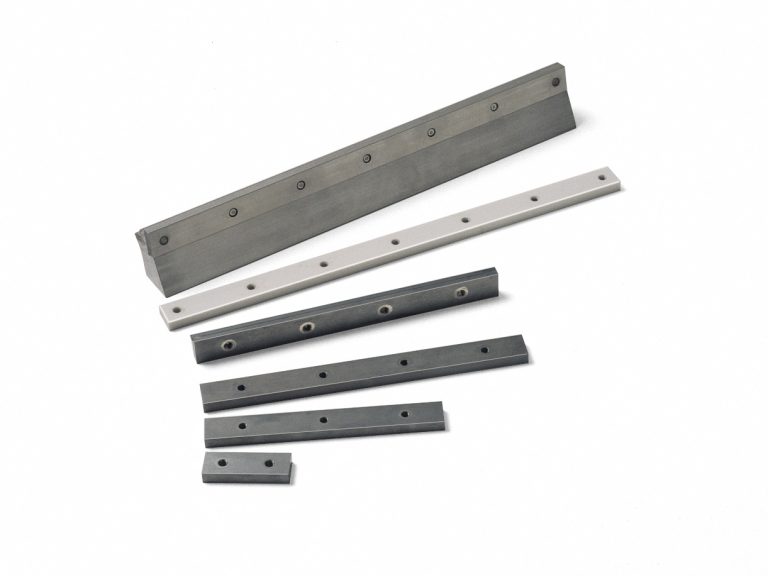
With a new slide retainer, HASCO offers a reliable solution for avoiding damage and malfunctions with slide inserts. The new InsertKey also enables unambiguous coding of inserts – for a better overview and process reliability in mouldmaking.

Hot Runner innovations

HASCO hot runner will show some new developments in the field of additive manufacturing in hot runner technology, and how these can contribute to making mouldmaking fit for the future. In addition to additively manufactured hot runners and filters with the highest possible throughput and the lowest shear, the focus is on methods for simple mould diagnosis in order to recognise wiring problems quickly and efficiently from the very beginning. Apart from other highlights, visitors will be able to witness the fast and intuitive ordering of spare parts – thanks to paperless mould documentation. This can always be called up directly at the mould.

HASCO, the pioneer of mouldmaking, supports its customers from the original idea to the final manufacture – with 100 ideas in the past and 100 ideas for the future.

https://www.hasco.com/

#Hasco #Modernplasticsindia #Pasticsnews #ModernPlasticsIndiaMagazine
#PrintPublication #Modernplasticssrilanka

Appointment of Regional Leader to Support Operations in Indian Subcontinent

Appointment of Regional Leader to Support Operations in Indian Subcontinent

FARREL POMINI, a global leader in the design and manufacture of compounding systems for abrasive, temperature-sensitive, and high-fill applications as well as recycling solutions, has appointed Karunakara Jayadeep as regional manager for the Indian subcontinent.

With over 28 years of experience in the global plastics compounding industry, Jayadeep will lead efforts to expand and support Farrel’s continuous mixing business across the region, working closely with customers to deliver tailored, high-performance solutions.

In previous roles with STEER, GE Plastics, LyondellBasell, ESTER Industries (now Radici Plastics) and LOXIM Industries, he leveraged his expertise in polymer compounding and equipment across India, Southeast Asia, Korea and other global markets. He specialized in turnkey project execution; plant design, commissioning and operations; process optimization; technical sales; and customer engagement.

“We are confident that Karunakara’s leadership and technical expertise will further strengthen our commitment to customer success,” said Farrel Pomini President Paul Lloyd.

www.farrel-pomini.com

#farrel-pomini #Modernplasticsindia #Pasticsnews #ModernPlasticsIndiaMagazine
#PrintPublication #Modernplasticssrilanka

A New Era of All Electric Recycling Efficiency Unveiled with Advanced Foaming Solutions at K 2025

A New Era of All Electric Recycling Efficiency Unveiled with Advanced Foaming Solutions at K 2025

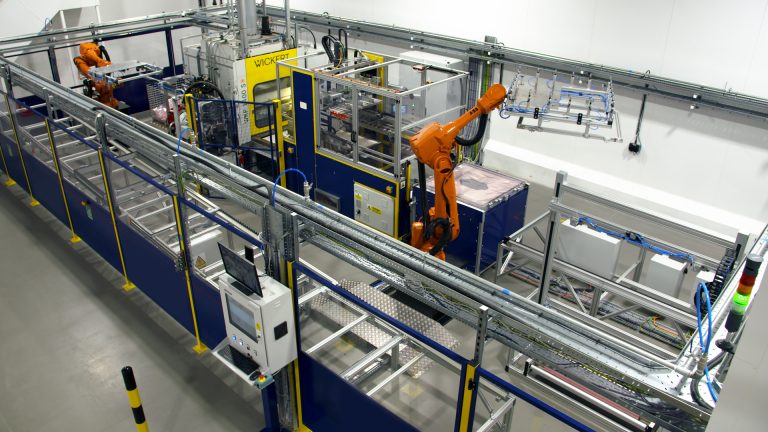
At K 2025 ENGEL will be demonstrating how maximum sustainability, cost-efficient production and space-saving system concepts can be successfully combined. The focus is on a production solution for foamed technical parts made from 100 percent post-consumer recyclate. The heart of the exhibit is an all-electric e-mac 220 injection moulding machine which produces thick-walled and robust plastic parts for the construction industry on a minimal footprint. These components offer significant weight savings – in an energy-efficient, precisely foamed and fully automated process.

The manufacturing principle used in this ENGEL production cell is particularly well suited to robust components that are as lightweight as possible and easy to handle, for example for replacing concrete in shafts.

The all-electric e-mac injection moulding machine with a clamping force of 2,200 kN uses ENGEL’s foammelt technology to foam components using a blowing agent. In combination with a specially developed additive mix, this creates a homogeneous, finely celled foam core. The advantage: reduced weight with increased stability. In the application shown, the ENGEL injection moulding cell achieves a weight saving of around 30% with a shot weight of 538 grams, while at the same time increasing the impact resistance of the component by 10%.

A post-consumer recyclate (PCR) is processed, originating from the “Gelber Sack”, collected by PreZero and high-quality reprocessed by EREMA. For the foaming process, an additive and blowing agent mixture developed by Moxietec is used, combined with the Vistamaxx additive from ExxonMobil. The dosing is carried out via a gravimetric system from Movacolor. The Moxietec formulation ensures a particularly homogeneous distribution of the foam structure and is therefore especially suitable for thick-walled components, where conventional physical foaming processes reach their limits.

A standard mixing screw from ENGEL ensures a homogeneous melt. It is specially designed for this type of application and optimised for uniform mixing behaviour. In addition, decompression after dosing can be completely omitted, reliably preventing sink marks and air inclusions in the component. This is made possible by a ring non-return valve with a newly developed geometry. Crowned valve wings ensure even greater reproducibility and – in combination with the short-stroke version – significantly faster closing behaviour.

The plasticising unit of this system uses iQ melt control to deliver an optimally prepared melt for foamed recyclates. The digital assistance system iQ melt control analyses the plastification process during sampling and suggests ideal setting parameters for screw speed, back pressure and dosing stroke. In this way, iQ melt control supports consistently high part quality with maximum material efficiency.

A cold runner system additionally supports the desired foaming behaviour. The cycle time on the all-electric ENGEL e-mac using the 2-cavity mould from Moxietec is approximately 120 seconds.

Especially for thick-walled components such as in this application, mould temperature control plays a crucial role. The latest generation of e-temp units operates with just 90 °C water temperature, eliminating the need for separate hot-water piping – which further reduces costs. The digital assistance system iQ flow control actively monitors the temperature control behaviour and regulates it dynamically. In combination with ENGEL’s e-temp devices, this ensures that temperature deviations are detected immediately and automatically corrected. The result is uniform cooling of the entire component – warpage is minimised and dimensional accuracy improved. The system makes a significant contribution to process stability and reduces the energy consumption of temperature control thanks to optimal flow regulation.

The entire production cell is designed to be compact. A servo sprue picker removes the sprue, while an ENGEL viper 12 linear robot takes out the moulded part and places it on a conveyor belt – which is space-savingly integrated into the machine’s safety guard. The automation is fully integrated into the control system of the injection moulding machine and helps reduce cycle times, as iQ motion control independently optimises the movement sequences. At the same time, it also reduces energy consumption. Savings of up to 85% in temperature control are possible. With this application, ENGEL demonstrates how sustainable production, advanced foaming technology and an intelligent cell layout – supported by digital assistance systems such as iQ flow control – can be combined into an economically compelling overall solution. Injection moulding companies benefit from a stable process for demanding recycled material applications, which can be reliably integrated into existing production environments without requiring much floor space.

www.engelglobal.com

#Engelglobal #Modernplasticsindia #Pasticsnews #ModernPlasticsIndiaMagazine
#PrintPublication #Modernplasticssrilanka

New Era of Efficiency and Sustainability for Plastics and Rubber at K 2025

New Era of Efficiency and Sustainability for Plastics and Rubber at K 2025

As a global plant manufacturer and reliable partner for future-proof, networked and sustainable solutions for high-quality bulk and raw materials, Zeppelin Systems will be showcasing its portfolio at K 2025, the trade fair for the plastics and rubber industry from October 8 to 15, 2025 in Düsseldorf. As part of the trade fair motto “The Power of Plastics! Green – Smart – Responsible.” the company presents its diverse solutions to the trade specialist audience.

Plastic with a future: Smart, Sustainable, powerful

Plastic is a versatile material that is widely used worldwide due to its functionality, durability and economy. As a plant engineering company, Zeppelin Systems has been supporting the plastics processing industry for decades – not only in the manufacturing process, but also in processing, reprocessing and recycling. The portfolio includes solutions for storing, conveying, mixing, dosing and weighing plastic materials – complemented by comprehensive automation and services.

Sustainability is increasingly in focus – both in the manufacturing process and in the recycling of plastics, which is becoming more and more important as a core element of the circular economy. At K 2025, Zeppelin Systems is therefore focusing on the theme “Rethink plastics for a smarter future” and presenting innovative solutions for future-proof plastics processing to the trade audience. “As a global plant manufacturer and a foundation-owned company, we develop sustainable solutions and processes for our customers. Every project phase is supported by us in partnership and in close coordination with our customers,” explains Hubert Stojanovic, Chief Sales Officer of Zeppelin Systems GmbH, the recipe for success.

TriplePlus: Protect Resources, Simplify Processes, Optimize Results

At K 2025, Zeppelin Systems will be showing how plastics processing can be completely rethought – efficiently, sustainably and digitally. The focus is on three key principles: “Protect Resources – Simplify Processes – Optimize Results”. This triad shapes the entire product and solution portfolio – from development to operation and service. The aim is to protect resources, make processes smarter and measurably improve the results for the customer.

Shaping the Circular Economy – Protect Resources

Zeppelin Systems has been active in the plastics recycling market for years and is making an important contribution to strengthening the circular economy with innovative technologies. The company offers solutions for almost the entire process chain – from storage and conveying to the agglomeration and compaction of fluffy materials to compounding and deodorization.

Especially for light fractions such as films, fleeces or fibers, Fluff-TEC ensures a homogeneous, good flow mass that can be processed efficiently and at the same time reduces the storage volume.

Another key process step is deodorization: With Fresh-TEC, Zeppelin Systems uses air flushing to remove volatile organic compounds from the recycled material. This means that high-quality recyclates can be reused even in sensitive applications – certified according to FDA and EFSA.

Embracing Digitalization – Simplify Processes

Digital solutions play a central role on the road to smarter plastics processing. That’s why Zeppelin Systems develops scalable plant concepts that are customized to product, raw material, and customer goals. Whether powders, granules or liquids – our in-depth understanding of materials and processes forms the basis for sophisticated, digitally networked systems. From planning and engineering to commissioning, every solution is conceptualized holistically and future-oriented – with tools such as FEED studies, 3D scans and end-to-end process automation. This creates highly transparent, reliable processes with a focus on zero waste and zero emissions – in line with the trade fair’s theme.

Caring about People – Optimized Results

High performance starts with responsibility. Zeppelin Systems combines innovative technology, precise components and sustainable process solutions to create plants that are environmentally and economically convincing – while always keeping people in mind. A high degree of automation, low energy consumption and sophisticated operating concepts ensure efficiency, safety and protection of the environment and employees. Whether for new projects, revamping or during ongoing operation – Zeppelin Systems accompanies all life cycles of a plant. The goal: maximum availability, minimum downtime and consistently high productivity. For a smarter and more sustainable plastics industry, the service team is available face-to-face or digitally with customized solutions, first-class support, and worldwide installation and commissioning.

Reliability, “German engineering” worldwide, short response times and a global footprint make Zeppelin Systems a strong partner for customers. We Create Solutions!

https://zeppelin-systems.com/

#zeppelin-systems #Modernplasticsindia #Pasticsnews #ModernPlasticsIndiaMagazine
#PrintPublication #Modernplasticssrilanka
Advanced NSF Certified Release Agents and Sprays Improve Plastics Processing Reliability

Advanced NSF Certified Release Agents and Sprays Improve Plastics Processing Reliability

HASCO has extended its wide portfolio of chemical working substances with a multi-functional silicone spray Z2640/… and a silicone-free high-performance release agent Z2650/….

Multi-functional silicone spray with outstanding release properties

With the new silicone spray Z2640/…, the range of chemical working materials has been supplemented by a versatile silicone-based release agent and lubricant.

The colourless, odourless spray forms a thin, non-disruptive film on the treated surface, which, through its excellent lubricating performance, significantly improves the slip properties and reliably prevents the sticking of thermoplastics and thermosets. At the same time, the spray offers a protective effect and is ideally suited for improving the process reliability in plastics processing.

Thanks to the 3H and H1 NSF certification, the new silicone spray can also be used in hygienically demanding production environments in the food segment. With a maximum service temperature of 220 °C, Z2640/… covers a broad range of application in the industrial environment.

Silicone-free high-performance release agent for sensitive applications

The newly developed release agent Z2650/… offers a silicone-free solution for applications with the highest hygiene requirements. Especially in the food and pharmaceutical industries, but also in the automotive segment, Z2650/… enables, as an all-synthetic high-performance product, safe and clean demoulding in the processing of many different plastics.

The release agent forms a very thin, but highly effective release film and is equally suitable for thermoplastics, thermosets and elastomers. Its good material compatibility ensures a particularly gentle application with the mould.

Z2650/… is NSF-H1-registered, and can thus also be used in production environments, in which, technically, contact with foodstuffs cannot be completely avoided. The protective coating can, if required, be easily removed without any residue. With a service temperature of up to 140 °C, the release agent offers reliable support even under demanding process conditions.

HASCO’s working substances are noted for their simple handling, are environmentally friendly and physiologically safe. The high active ingredient content allows minimisation of consumption, which contributes to the economic viability.

https://www.hasco.com/

#hasco #Modernplasticsindia #Pasticsnews #ModernPlasticsIndiaMagazine
#PrintPublication #Modernplasticssrilanka

New Leadership Era Begins With the Appointment of Birgit Seeger as Chief Executive Officer to Guide Organizational Transformation

New Leadership Era Begins With the Appointment of Birgit Seeger as Chief Executive Officer to Guide Organizational Transformation

Effective November 1, 2025, Birgit Seeger will become CEO of NORMA Group. The Supervisory Board of NORMA Group today appointed her as the future Chair of the Management Board. As planned, the current interim CEO Mark Wilhelms will return to the Supervisory Board as of November 1.

Kerstin Müller-Kirchhofs, Chair of the Supervisory Board of NORMA Group, says: “With her exceptional industry expertise and proven track record in transformation processes, Birgit Seeger is the ideal candidate. I am confident that she will effectively leverage this experience, combined with her conceptual clarity, operational implementation strength and strong leadership skills, to advance NORMA Group.”

Mark Wilhelms (65) returns to the Supervisory Board of NORMA Group

Birgit Seeger has many years of management experience with positions in industrial companies and management consultancies. Currently, she is Senior Vice President of the Comfort Actuators business unit of Robert Bosch GmbH and thus responsible for the global business with electric drives for seats, sunroofs and window lifters in vehicles. She is also a member of the Board of Directors of Konecranes Oyj, a manufacturer of cranes and lifting equipment listed on the Finnish stock exchange Nasdaq Helsinki. Previous positions include international consulting firms and various management positions in the automotive supply industry. She started her career as a project manager at Robert Bosch GmbH after graduating from University of Tübingen with a degree in business administration.

Designated CEO Birgit Seeger says: “NORMA Group is on its way to becoming a focused industrial supplier with two strong business units: industry applications for a wide range of uses, and solutions for vehicles of all drive types. I am taking on the task of driving this transformation forward with energy and respect, alongside my colleagues on the Management Board. Together, we will lead this process to success. We will do everything in our power to build trust among customers, employees, and shareholders, to realize the potential of NORMA Group, and to achieve sustainable profitable growth.”

Kerstin Müller-Kirchhofs thanks the current interim CEO: “On behalf of the Supervisory Board, I would like to warmly thank Mark Wilhelms for his willingness to join the Management Board on an interim basis. He has ensured continuity in management and consistently driven forward important initiatives, such as the ongoing divestment of the Water Management business unit, forward.” Mark Wilhelms will continue to serve as CEO until Birgit Seeger takes over, after which he will return to the Supervisory Board.

www.normagroup.com

#normagroup #Modernplasticsindia #Pasticsnews #ModernPlasticsIndiaMagazine
#PrintPublication #Modernplasticssrilanka
Partnership Expansion Driven by New Volume Contract Agreement

Partnership Expansion Driven by New Volume Contract Agreement

Brückner Maschinenbau, the world’s leading manufacturer of film stretching lines, has once again awarded Coperion a volume contract for ZSK twin screw extruders of the ZSK Mc18 series. This order is based on the long-standing, intensive cooperation between Brückner and Coperion, which began back in 2008.

Brückner initially used Coperion ZSK extruders for BOPP film lines. This was followed by numerous projects that the two companies successfully implemented together. In the meantime, the range of applications for film stretching lines has expanded significantly: Brückner also implements lines for BOPET, BSF, and BOPA films with ZSK extruders, among others.

The current volume contract underscores Brückner’s confidence in Coperion’s proven technology. The ZSK extruders melt the compounds that feed the film stretching lines. Thanks to their high torque, the ZSK Mc18 extruders achieve very high throughputs while maintaining low product temperatures, resulting in first-class product quality.

“We greatly appreciate the close, constructive cooperation with Brückner Maschinenbau,” says Cornelia Koch, Business Segment Manager Direct Extrusion at Coperion. “Together, we have already successfully completed numerous projects. With the comprehensive expertise of our two companies, we have been able to develop many innovative solutions over the years that have increased the throughput rates of Brückner film stretching lines, boosted their efficiency, and improved film quality.”

www.coperion.com

#coperion #Modernplasticsindia #Pasticsnews #ModernPlasticsIndiaMagazine
#PrintPublication #Modernplasticssrilanka

An Exclusive Interview with Mr. Mariano Suarez, beyond carnauba: bio-based waxes redefining stability and sustainability in coatings & Inks

An Exclusive Interview with Mr. Mariano Suarez, beyond carnauba: bio-based waxes redefining stability and sustainability in coatings & Inks

Global trade conditions are changing rapidly. From seasonal crop risks to new tariffs and supply chain constraints, the reliability of traditional waxes such as carnauba is decreasing. This volatility comes at a cost for coatings and inks manufacturers.

“When trade conditions change, your wax supply shouldn’t,” says Mariano Suarez, Clariant’s Head of Marketing for Additives. “Our bio-based solutions, built on the innovation-driven LicocareTM RBW Vita platform and enhanced by new developments such as CeridustTM 1150, deliver stability, sustainability, and high performance. Together, they offer our customers a reliable choice in coatings and inks.”

What macro shifts are putting pressure on traditional wax supply chains?

Mariano Suarez: Traditional wax supply chains are under growing pressure due to concentrated sourcing, seasonal limitations, and evolving global trade dynamics. Carnauba wax, for example, is harvested almost exclusively in Brazil. Its availability can fluctuate due to climate conditions and regional factors. As tariff frameworks change in key markets such as the US, manufacturers face greater complexity in planning and costs. These changes are prompting many manufacturers to reevaluate their material strategies and seek more stable and scalable alternatives.

How is Clariant helping manufacturers within the coatings industry manage volatility while also advancing sustainability?

Mariano Suarez: We’ve invested in stable, high-performing alternatives that address supply chain challenges directly. Our Licocare RBW Vita waxes are sourced from non-edible rice bran, an abundant agricultural byproduct with a secure, diverse supply chain across Asia. They deliver the performance customers expect while offering a renewable carbon index of over 98%, zero PFAS content, and up to 80% lower carbon footprint than fossil-based waxes. Because they avoid the seasonal, location-specific risks of carnauba, manufacturers not only gain measurable sustainability benefits but also a more consistent and scalable supply base. In an environment where tariffs and market realities can shift overnight, that combination of stability and sustainability makes all the difference.

Ceridust 1150 is a new addition to your portfolio. What does it bring to the table?

Mariano Suarez: Ceridust 1150, our latest rice bran wax-based additive, combines reliable supply with high performance for coatings and ink applications. It supports the transition away from fossil and montan waxes while avoiding the volatility of other waxes without compromising on functionality. The product delivers excellent scratch resistance, gloss control, and anti-blocking properties, exactly what customers expect from a high-end wax additive. And for those who want more information, our technical experts are ready to share insights into the unique advantages of rice bran wax.

Are customers ready to move away from traditional waxes, and what’s driving that shift?

Mariano Suarez: Absolutely. There’s strong momentum behind this shift. Customers are looking for sustainable, reliable, long-lasting ingredients. They understand that supply chain uncertainties are becoming the norm and want to proactively reduce risks. Meanwhile, growing regulations surrounding PFAS and emissions are propelling the industry toward more transparent solutions, exactly where Clariant’s expertise and innovative wax alternatives come into play to support a smooth transition.

Any final thoughts on how Clariant sees the future of performance waxes?

Mariano Suarez: Performance alone is no longer enough. What matters is purposeful performance that is delivered reliably, sustainably, and at scale. That’s precisely what we offer with the established Licocare RBW Vita range and our new Ceridust 1150. We’re not waiting for the next disruption. We’re developing solutions that will outlast it.

www.clariant.com

#clariant #Modernplasticsindia #Pasticsnews #ModernPlasticsIndiaMagazine
#PrintPublication #Modernplasticssrilanka

Strategic Leadership Shift as Carmen Berger Oversees Project Management

Strategic Leadership Shift as Carmen Berger Oversees Project Management

Carmen Berger (32) will take over as Director of MEDICA and COMPAMED in Düsseldorf, the leading international industry platforms for the medical technology industry and its suppliers, from 1 October 2025. This means that, in addition to project control and leadership of the project team, she will be responsible for the global strategic positioning and marketing of both trade fair brands. Carmen Berger succeeds Christian Grosser, who left Messe Düsseldorf at the end of May.

In her role, she and her project team will be housed within the operative division of Marius Berlemann, Chief Operating Officer, and will be reporting directly to Michael Degen, Executive Director Trade Fairs.

“Having performed a variety of professional roles in international corporate consulting, most recently as Head of Life Sciences, Carmen Berger unites leadership competence with strategic and conceptual expertise. She therefore has the right qualifications to successfully lead a motivated project team in a dynamic environment and further develop the most important events for the entire medical technology value chain, which attract several thousand exhibitors and trade visitors from around 150 countries,” Marius Berlemann is assured.

“I’m really looking forward to joining an experienced and versatile team in moving MEDICA and COMPAMED forward energetically and with fresh ideas and generating new impetus for the future. Our aim is to tread new paths and position the platforms among the international competition in such a way that they continue to create genuine added value for exhibitors, professionals and the industry as a whole in the future,” Carmen Berger explains.

https://www.medica-tradefair.com

#medica #Modernplasticsindia #Pasticsnews #ModernPlasticsIndiaMagazine
#PrintPublication #Modernplasticssrilanka

An Exclusive Interview on the road to K 2025 with Peter von Hoffmann, General Manager Business Unit Compounding Machines, and Frank Lechner, General Manager Process Technology and R&D at Coperion, the twin-screw extruder enables high recyclate qualities

An Exclusive Interview on the road to K 2025 with Mr. Peter von Hoffmann, General Manager Business Unit Compounding Machines, and Mr. Frank Lechner, General Manager Process Technology and R&D at Coperion, the twin-screw extruder enables high recyclate qualities

How can resource conservation be improved through greater efficiency in compounding?

Peter von Hoffmann: Efficiency is the central goal at Coperion. All our technologies for compounding and recycling plastics are designed with this goal in mind. One example is our ZSK twin-screw extruder, which we currently offer in the ZSK Mc18 generation. It achieves extremely high throughputs, with relatively low energy consumption and a high degree of automation. Numerous additional units such as side feeding, degassing, and condition monitoring increase its performance, enabling our valuable resources to be used in a highly targeted manner, and maximum output to be achieved with high efficiency.

How do you achieve this increase in efficiency?

Von Hoffmann: Let’s stick with the example of the ZSK extruder: in order to achieve this high-power density, all process parameters of the extruder must be correctly determined. The mechanical variables that transfer the high torque to the twin screw need to be specified. In addition, there are process engineering factors that ensure consistently high product quality during compounding. This is the basis: an interplay of “old technology”, process engineering and automation. This is where our wealth of experience in the construction of twin-screw extruders really works in our favour.

What role does digitalisation play?

Von Hoffmann: Once the foundation is in place, digitalisation comes into play. With our C-BEYOND digital platform, operators can view the operating data of their plant at any time. This data is available in the form of informative analyses in real time. Important information on key performance indicators (KPIs) for a production line, such as availability, production volume and product quality, is clearly visible at a glance. With C-BEYOND, the production process can be documented in detail, and the scheduling of maintenance work optimised. C-BEYOND also identifies the energy consumption and CO2 emissions per kilogram of compound produced. With the Overall Equipment Effectiveness Tool, or OEE Tool for short, customers can view the efficiency of their plant and react quickly to any deviations.

How are digital products of that nature regarded by customers?

Von Hoffmann: We initially introduced C-BEYOND to a number of trial customers. Now, increasing numbers of customers want to retrofit their systems with it, in order to benefit from its numerous features. We offer digital life cycle management for example, which provides customers with a proactive maintenance plan that shows when maintenance measures are due for a unit, such as changing the gear oil. We use a condition monitoring system to record the actual load on an extruder. The customer is notified as soon as irregularities occur during an extruder operation and can plan service measures with sufficient lead time. The power consumption of the plant and each unit is also displayed digitally via C-BEYOND. Therefore, anomalies can be identified immediately and countermeasures taken. C-BEYOND can also be viewed on a smartphone via an app. This means that even the company boss can view all the live data from the machines from anywhere.

Is there a trend among your customers towards purchasing complete systems?

Von Hoffmann: Yes, there is a trend in that direction. At Coperion, we offer everything from individual equipment, such as a feeding unit, a rotary valve, or an extruder, to complete systems. It very much depends on the specific application of the system, and where it is to be installed. We have customers who buy individual units from us. If the systems are intended for other countries, they often want to play it safe and will place an order with us for a complete system. They then benefit from the added value of having a partner who can supply them with everything they need. We have the specialist knowledge for the individual machines, as well as the expertise for complete systems.

What role does the twin-screw extruder play in recycling?

Lechner: It is key to producing high-quality recycled materials. In the early days of recycling, single-screw extruders were widely used. However, these have limited capabilities and reach those limits when quality requirements increase. This is where the twin-screw extruder is unbeatable, as it melts the waste plastic very energy-efficiently, and produces a very homogeneous, well-degassed melt that is extremely gentle on the product. The result is a very high-quality compound. A second argument in favour of the twin screw is the throughput. A single screw is expedient for lower throughputs, but with material flows becoming larger, and applications more diverse, the twin screw is unbeatable.

Has the trend towards recycling slowed down?

Lechner: Germany produces around 5.7 million tonnes of plastic waste every year, of which around 35 percent is recycled. There is definitely room for improvement here. However, the demand for recycled materials is currently higher than the availability of raw materials. This is slowing down recycling somewhat. In addition, less plastic is being produced in this country overall because companies have relocated part of their production abroad due to high energy prices. The fact that the oil price is currently quite low is not helpful either. This makes recycled goods significantly more expensive than new goods. Nevertheless, we see a strong drive towards recycling, not only in Germany, but all over the world; that is why we believe that the trend towards recycling is continuing unabatedly.

Many plastics are considered non-recyclable. Will that change?

Lechner: It’s true that we can’t recycle everything yet, but there is a lot of research and development taking place. In the future, it will be possible to recycle plastics that are currently considered non-recyclable in an economically viable way. A lot of things are already possible today that weren’t possible a few years ago. We are now very good at recycling technical plastics, but also a range of mixed plastics. For example, multi-layer film can already be recycled mechanically in such a way that the result can be reused as a layer in a multi-layer film. With our new ZSK FilCo filtration compounder, we can produce recycled plastic with significantly higher product quality than was previously possible using the common two-stage recycling process. This makes many recompounds attractive for a much wider range of applications.

Many companies in Germany are struggling with the problem of a shortage of skilled workers. Is this also your experience at Coperion?

Von Hoffmann: The shortage of skilled workers is a major problem for all of us. Due to demographic developments, it is not likely to ease significantly in the foreseeable future. This is one of the reasons why our industry develops machines that are highly automated and therefore require fewer operators. Nevertheless, we will always need qualified personnel. We are working very hard to ensure that we recruit them, and are proud that we are currently training 76 apprentices and dual students at our German sites. We want to attract people to our company at an early stage and retain them.

https://vdma.eu/

#vdma #Modernplasticsindia #Pasticsnews #ModernPlasticsIndiaMagazine
#PrintPublication #Modernplasticssrilanka